
 Save
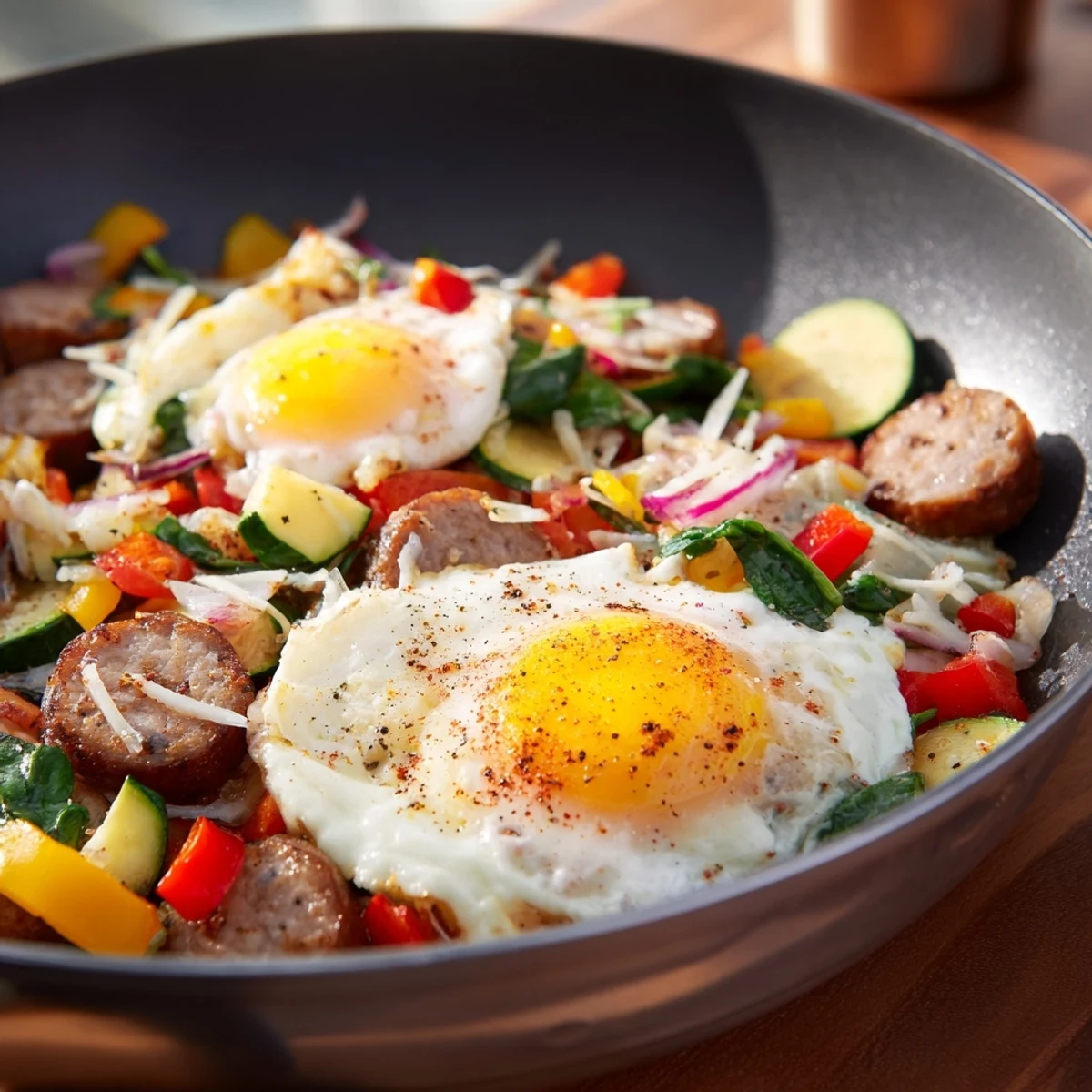
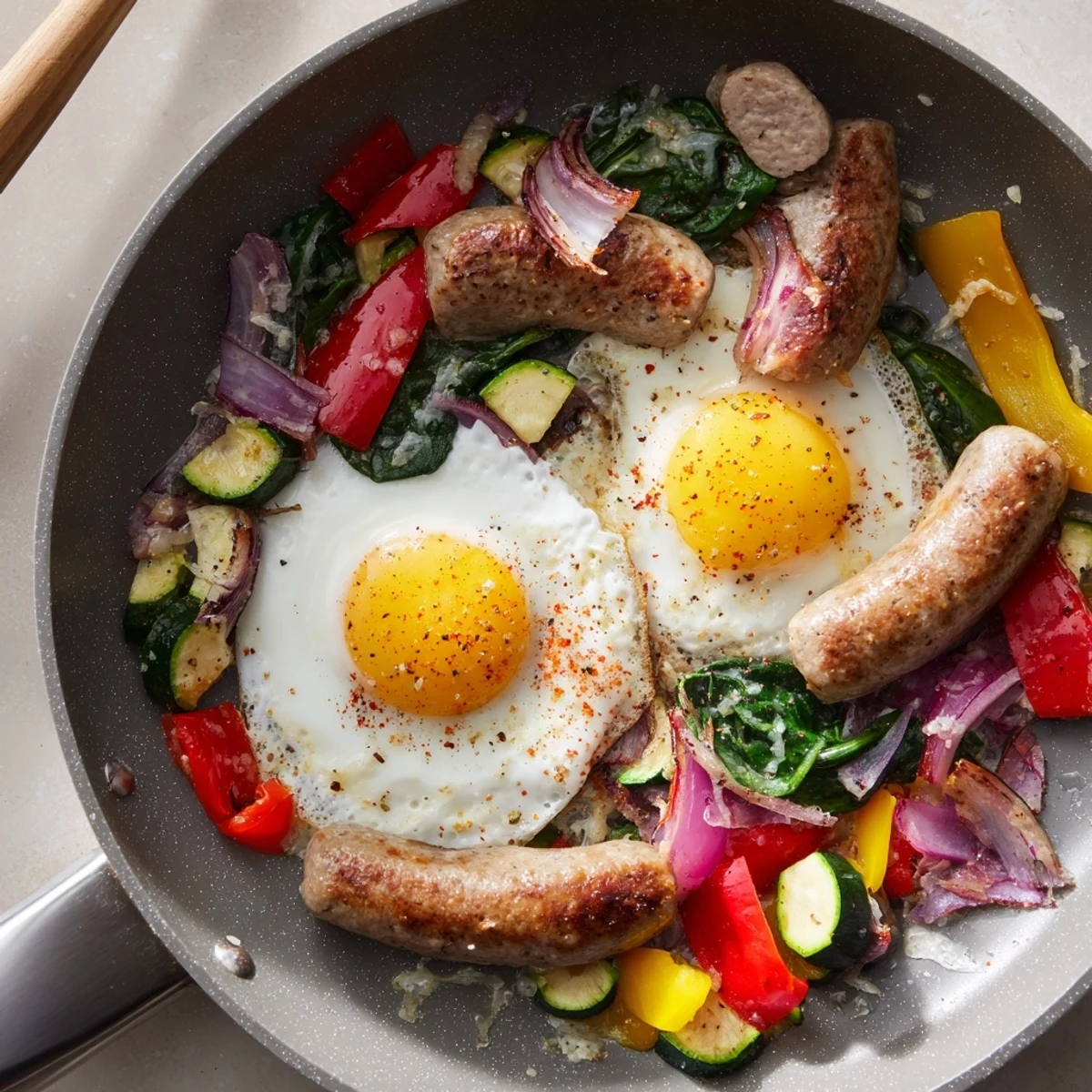
Save This skillet blends the warmth of sautéed bell pepper, zucchini, and spinach with sliced chicken or turkey sausage. Eggs cook gently in the skillet, melding with smoked paprika and garlic powder for a comforting low-carb start. Finished with melted cheddar cheese, it offers a flavorful, nutritious breakfast option that’s quick to prepare and easy to customize with your preferred ingredients.
There's something about a crisp morning that calls for a breakfast that actually sticks with you. I remember waking up on a particularly chilly Saturday, craving something warm and hearty but without the heavy feeling that usually follows a big breakfast. That's when I started playing around with eggs and sausage in a skillet, throwing in whatever fresh vegetables I had on hand. What emerged was this beautiful, one-pan breakfast that tastes indulgent but leaves you feeling energized rather than sluggish. It became my go-to whenever I wanted to prove that eating low-carb doesn't mean sacrificing comfort or flavor.
I'll never forget the morning I made this for my sister during her visit. She'd been experimenting with cutting back on carbs, and I could see the hesitation in her face when I mentioned it was low-carb. But one bite of that melted cheese draped over the perfectly cooked eggs and caramelized vegetables, and she was completely won over. She texted me weeks later asking for the recipe because she'd been making it every Sunday. That's when I knew this wasn't just a recipe—it was something special.
Ingredients
- 2 large eggs: These are the star of the show, so use the freshest ones you can find. Fresh eggs hold their shape beautifully and have richer, creamier yolks that add so much to the final dish
- 2 chicken or turkey breakfast sausages, sliced (sugar-free preferred): The sausage adds savory depth and helps create those delicious browned bits that flavor everything in the skillet. I learned early on that sugar-free varieties exist, and they make all the difference for keeping carbs down without any weird aftertaste
- 1/2 cup chopped bell pepper (any color): I prefer a mix of colors for visual interest and slightly different flavor notes—red peppers are sweeter, yellow are mild, and green bring a little earthiness
- 1/2 cup chopped zucchini: Zucchini adds bulk and creaminess as it softens, making the skillet feel more substantial without any carb guilt. Cut it into small enough pieces so it cooks evenly
- 1/2 cup baby spinach: This wilts down to almost nothing, so don't be shy with it. Fresh spinach adds nutrients and a subtle earthiness that rounds out the flavors beautifully
- 1/4 cup diced red onion: Red onion brings a touch of sharpness and sweetness when cooked. I always finely dice mine so it distributes evenly and cooks completely
- 1/4 cup shredded cheddar cheese (or your favorite cheese): Use really good quality cheese if you can—it melts smoothly and tastes infinitely better than the pre-shredded stuff. Sharp cheddar is my favorite because it adds more character
- 1 tablespoon olive oil or avocado oil: The oil is crucial for preventing sticking and creating those wonderful caramelized edges on the vegetables and sausage. I use avocado oil because it handles heat better than olive oil
- 1/2 teaspoon smoked paprika: This adds a subtle smokiness that makes the whole skillet taste like it took way more effort than it actually did
- 1/4 teaspoon garlic powder: Just enough to add depth without overwhelming. Fresh garlic burns too easily at the temperatures we're using here
- Salt and freshly ground black pepper, to taste: These seem simple, but they're what bring everything into focus. Always taste and adjust at the end
Instructions
- Heat your skillet and get the pan ready:
- Place a medium nonstick skillet over medium heat and let it warm for about a minute. You want it hot enough that the oil shimmers when you add it, but not so hot that it smokes. This is where good technique starts—a properly heated pan means everything cooks evenly and beautifully
- Brown the sausage until it's caramelized:
- Pour in your oil, then add the sliced sausages. Let them sit for a moment before stirring so they develop a golden-brown crust. Stir occasionally as they cook, breaking them into smaller pieces as they go. You're looking for about 3–4 minutes of cooking, until they're lightly browned and starting to release their flavorful oils. Listen for that gentle sizzle—it tells you the pan is at the right temperature
- Build your vegetable base:
- Add the bell pepper, zucchini, and red onion to the sausage, stirring to combine. Let them cook undisturbed for a minute or two so they start to soften and pick up some of the brown bits from the sausage. Then stir and let them continue cooking for another 4–5 minutes, until the vegetables are tender but still have a little bite to them. You want to hear them softening as you stir, feel the skillet getting fuller and warmer
- Wilt the spinach into the mix:
- Stir in the fresh spinach and cook for just about a minute. It'll seem like a lot of spinach at first, but it reduces down dramatically. Stir gently so it incorporates evenly, and watch as it transforms from bright green to a darker, more subdued color
- Create wells for your eggs:
- Using the back of your spatula, gently push the vegetable and sausage mixture toward the sides of the skillet, creating two little wells in the center. This is a satisfying moment—you're building a nest for your eggs. Take your time with this step so the wells are clear and the vegetables form a nice wall around them
- Crack the eggs into their nests:
- Crack both eggs directly into the wells you've created. Don't worry if a little of the whites overflow slightly into the vegetables—this actually makes the whole dish more cohesive. Take a moment to appreciate how beautiful this looks before moving on
- Lower the heat and cover:
- Turn the heat down to medium-low and place a lid on your skillet, or even just a baking sheet if you don't have a lid. This creates a gentle steam that cooks the eggs from above while they cook through on the bottom. You want to hear the gentle sizzle quieting down as the temperature lowers
- Cook until the eggs reach your preference:
- This is where personal preference matters. If you like runny yolks, 3 minutes is your target. If you prefer completely set yolks, go for 4–5 minutes. Peek under the lid after 3 minutes to check progress. When you lift the lid, a gentle steam should escape and the eggs should be coming together beautifully
- Season and top with cheese:
- Remove the lid and sprinkle the smoked paprika, garlic powder, salt, pepper, and shredded cheese over the entire skillet. The heat from the pan will start melting the cheese right away. Don't be timid with the seasonings—taste as you go and add more if needed
- Give the cheese one final moment to melt:
- Cover the skillet for just one more minute to let that cheese fully melt into creamy, delicious perfection. When you lift the lid this time, you should see melted cheese pooling slightly over the eggs and vegetables, making everything look absolutely irresistible
- Serve immediately while everything is still hot:
- Transfer the skillet to a serving plate, or if you're cooking for one, eat right out of the skillet with a spatula and fork. The warmth of the pan keeps everything at the perfect temperature, and everything tastes best right now, in this moment
 Save
Save What really got me about this recipe was when my neighbor popped over one morning and caught the aroma wafting from my kitchen. She stood in the doorway watching me finish it, and when I offered her a plate, she teared up a little bit. Turns out she'd been struggling with her energy all morning and was about to reach for her usual processed breakfast bar. Instead, she had this warm, satisfying meal made with real food that kept her going all morning. That's when I realized this recipe wasn't just about low-carb living—it was about nourishing yourself with intention and care.
Making It Your Own
One of my favorite things about this skillet is how forgiving and customizable it is. The base is strong enough that you can swap and substitute ingredients based on what you have on hand or what you're craving. I've made it with different sausage varieties, added mushrooms when I had them, thrown in kale for a different texture. The basic technique stays the same, but your version becomes uniquely yours. That's when cooking stops being following instructions and starts being creative expression. Trust your instincts—if you think something would taste good in this skillet, it probably will.
The Best Way to Enjoy It
Timing is everything with this dish. You want to serve it immediately after the cheese melts, while everything is still steaming and the yolks are at their perfect temperature. I always pair mine with black coffee—the slight bitterness of the coffee plays beautifully against the richness of the eggs and cheese. Some mornings I add a simple side salad with a sharp vinaigrette, which cuts through the richness in the most satisfying way. The beauty of this meal is that it feels substantial enough to be your only breakfast, but it doesn't weigh you down the way heavier meals can.
Storage and Make-Ahead Tips
This skillet is really best served fresh, but I've learned a few tricks for making mornings easier. You can prep all your vegetables the night before and store them in an airtight container in the refrigerator. The sausage can be sliced ahead of time too. Come morning, everything just needs to go into the hot skillet in sequence, and you're eating breakfast in about 20 minutes. I don't recommend reheating leftovers in the microwave because the eggs get rubbery, but if you do have leftovers, they make an interesting cold salad base when chopped up and tossed with greens and vinaigrette.
- Prep vegetables the evening before to make mornings even quicker
- Keep sugar-free sausage varieties on hand for easy low-carb breakfasts anytime
- Experiment with different cheese varieties to keep the recipe from getting boring
 Save
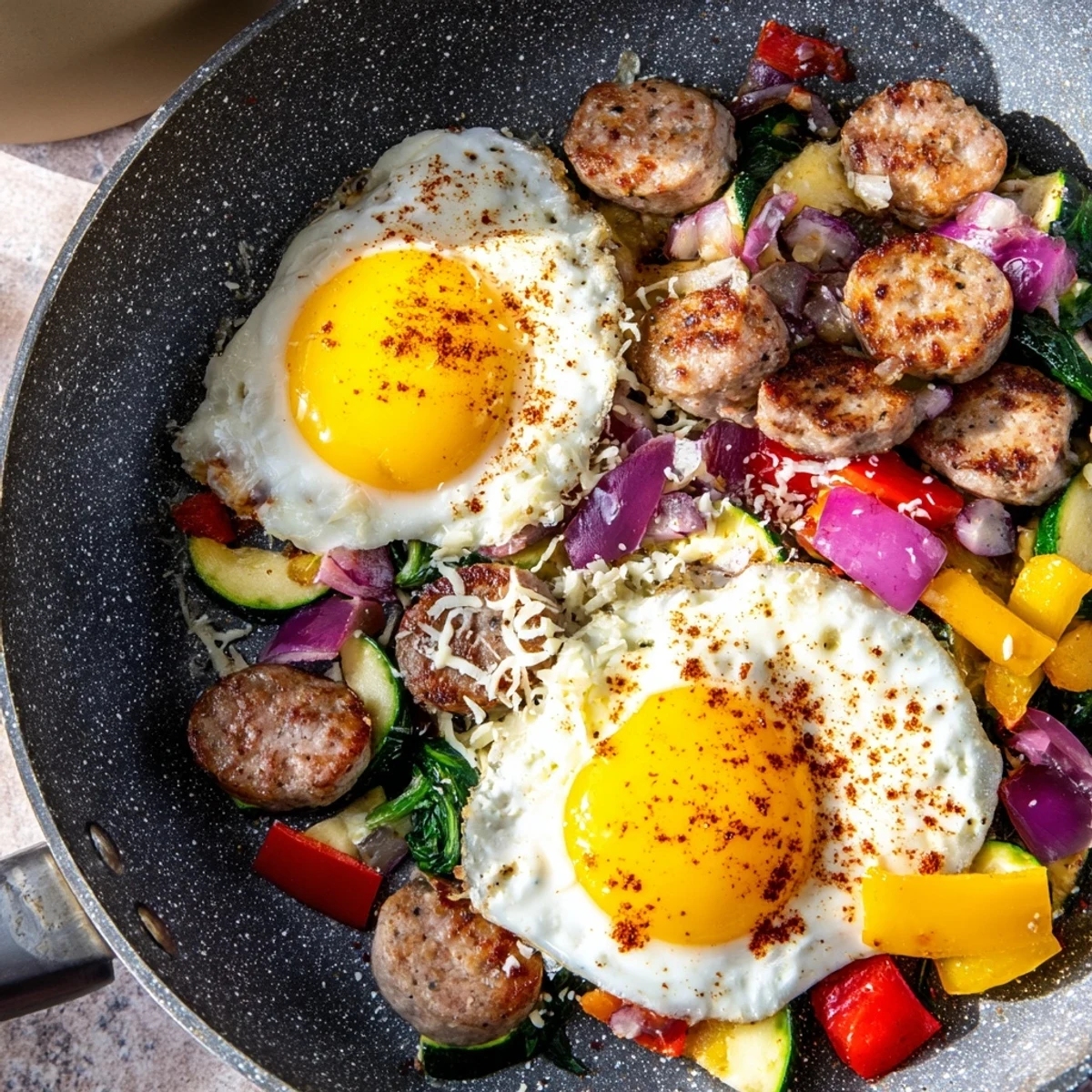
Save This simple skillet breakfast has become my answer to so many mornings. It's proof that eating well doesn't have to be complicated, and that some of the best meals are the ones we make with intention and share with people we care about.
Recipe FAQs
- → Can I use other types of sausage?
-
Yes, chicken or turkey sausage works well, and plant-based alternatives can be used for vegetarian variations.
- → What oils are best for cooking this skillet?
-
Olive oil or avocado oil are recommended for their flavor and healthy fat content.
- → How do I prevent eggs from overcooking?
-
Cook eggs covered on low heat and monitor closely, removing from heat once the whites set and yolks reach desired doneness.
- → Can I add more vegetables?
-
Absolutely, mushrooms, kale, or other fresh vegetables can enhance both nutrition and taste.
- → Is this dish suitable for a gluten-free diet?
-
Yes, the ingredients used are naturally gluten-free, but always check sausages for hidden gluten ingredients.