
 Save
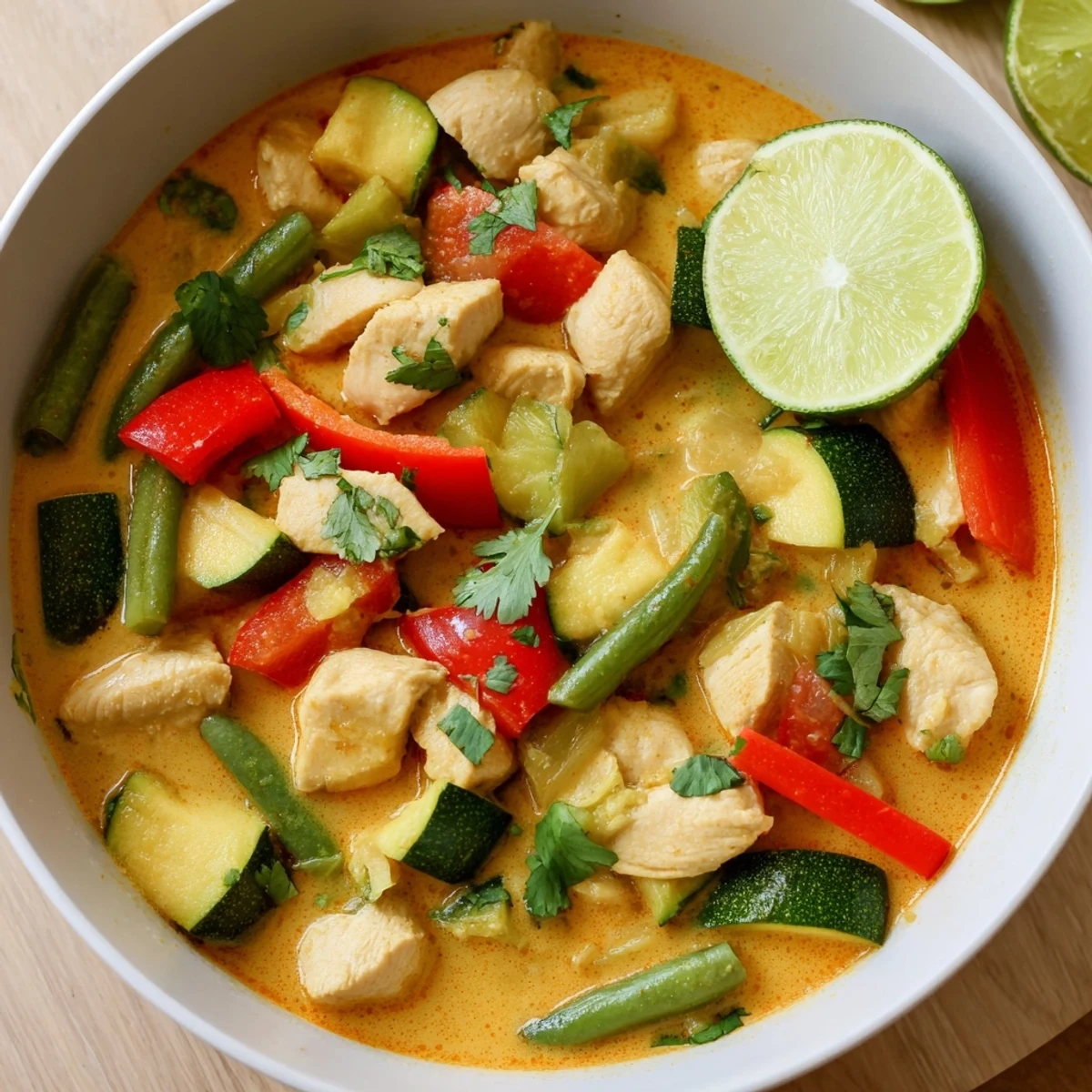
Save This dish blends tender chicken pieces with zucchini, bell pepper, and green beans, all simmered in creamy coconut milk infused with warming spices like curry powder, cumin, and turmeric. Quick to prepare, it offers a flavorful, low-carb option with easy seasoning adjustments. Garnish with fresh cilantro and a squeeze of lime for brightness. It can be adapted for vegetarian diets and pairs well with cauliflower rice for a light, satisfying meal.
There's something about the first cool morning of the season that makes me crave a warm bowl of curry. I was standing at the farmers market last October, watching my breath form small clouds, when I spotted the most vibrant red peppers next to bundles of fresh cilantro, and suddenly I knew exactly what I wanted to cook. This curry came together that evening, filling my kitchen with the kind of fragrance that makes everything feel slower and more intentional. It's become my go-to when I want something deeply satisfying without the heaviness, perfect for when you want to feel nourished rather than stuffed.
I made this for my sister during a surprise visit on a blustery afternoon, and she kept coming back to the stovetop asking what was happening in there. The way the kitchen filled with turmeric and cumin smoke, how it clung to her coat even as she left hours later—she texted later saying she could still smell it. That's when I realized this wasn't just a recipe, it was the kind of meal that stays with people.
Ingredients
- Chicken breast: Buy it boneless and skinless to keep this lean and quick-cooking; cutting it into bite-sized pieces lets the spices cling to every surface and means it cooks evenly without drying out.
- Zucchini and bell pepper: The vegetables stay slightly crisp if you don't overcrowd the pan, giving you texture that feels almost vegetable-forward even though the chicken is the real star.
- Fresh ginger and garlic: These two are non-negotiable; they're what transform simple ingredients into something that smells like someone who knows what they're doing spent hours cooking.
- Curry powder, cumin, and turmeric: The holy trinity that makes this sing, each one adding its own voice rather than drowning each other out.
- Coconut milk: Light coconut milk keeps the carbs down without sacrificing creaminess; the milk solids settling at the bottom of the can are the best part.
- Lime and cilantro: These aren't afterthoughts—they're what wake everything up at the end, cutting through the richness with brightness that makes you take another spoonful.
Instructions
- Build your flavor base:
- Heat the olive oil until it shimmers slightly, then add the onion, garlic, and ginger together. You'll know it's ready when the smell changes from raw onion to something warm and a bit sweet, about 2 to 3 minutes—that's your signal that everything is softened and ready to carry the spices.
- Brown the chicken gently:
- Add the chicken pieces and let them sit for a minute before stirring; you want a light golden crust on each piece, which takes about 4 to 5 minutes. This isn't a sear-and-remove situation—you're just giving them enough color to add depth.
- Toast the spices:
- Sprinkle in all the dry spices at once and stir immediately so they coat the chicken and vegetables. The curry powder, cumin, and turmeric will bloom in the heat, transforming from powder into something that actually smells like food worth eating.
- Add the vegetables:
- Toss in the zucchini, bell pepper, and green beans, stirring just enough to combine. They'll release a tiny bit of water and start to soften slightly, which happens in about 2 to 3 minutes.
- Create the sauce:
- Pour in the coconut milk and broth together, stirring gently to make sure nothing sticks to the bottom. The mixture will look a bit thin at first, but that's perfect—it's about to become something creamy and rich.
- Let it simmer:
- Lower the heat, cover the pot, and let everything bubble gently for 15 to 18 minutes. The chicken will cook through, the vegetables will soften but keep their shape, and the flavors will meld into something greater than their individual parts—you'll know it's ready when the chicken is no longer pink inside and the green beans have lost their raw bite.
- Taste and adjust:
- Before serving, taste and add more salt, lime juice, or chili flakes if you want it different. This is your moment to make it exactly what you want.
- Serve with intention:
- Ladle it into bowls, scatter cilantro over the top, and serve with lime wedges so people can squeeze them in themselves—that little bit of control over their own bowl matters more than you'd think.
 Save
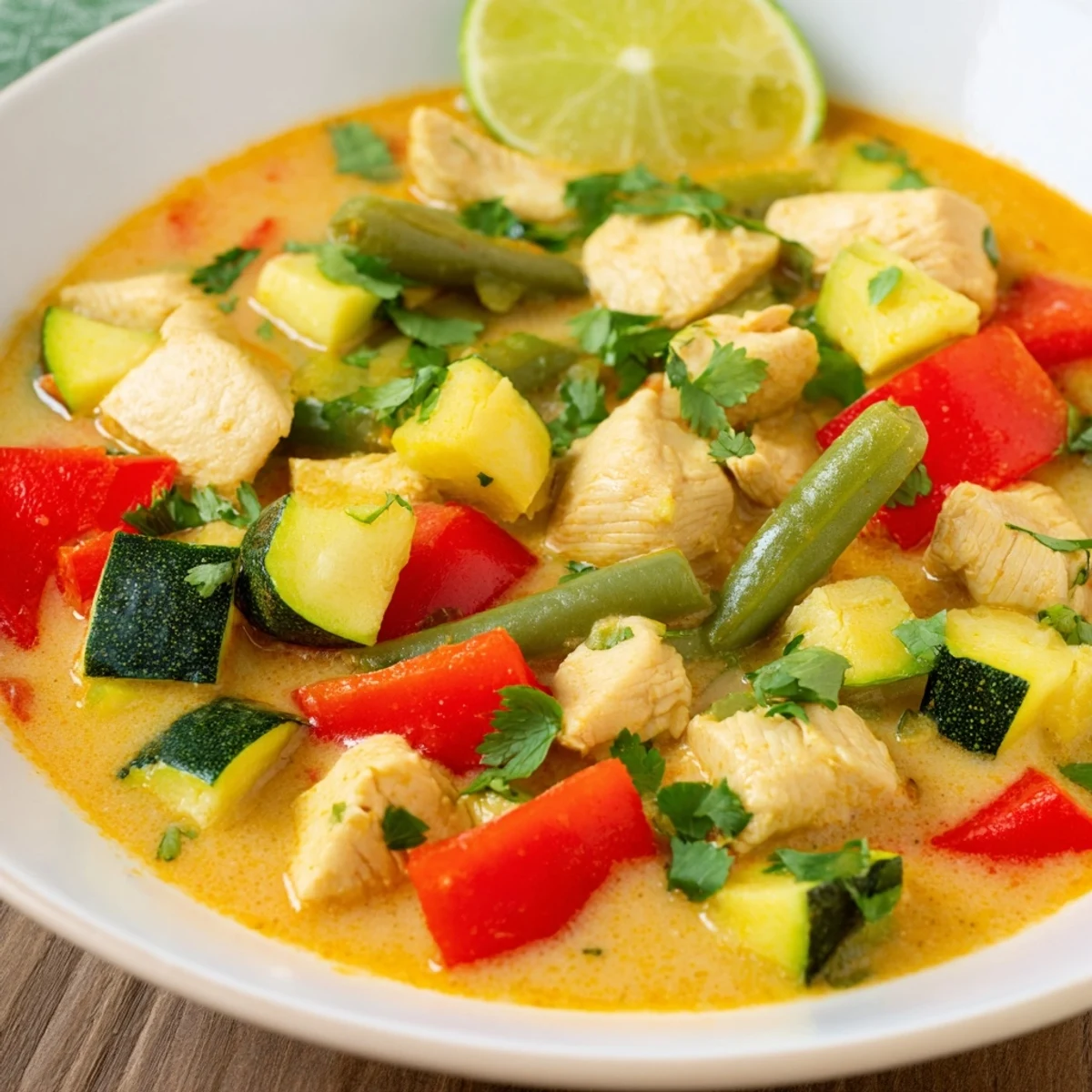
Save My friend asked me once why I made curry on difficult days, and I realized it was because of how much attention it asks for without being demanding. You're not thinking about your worries when you're focused on watching for that subtle change in color when the spices hit the oil, or feeling the steam from the pot on your face as you lean in to check the chicken. It's meditation disguised as cooking.
The Magic of Spice Blooming
The moment when you add the curry powder to the hot chicken and aromatics is where the real transformation happens. The spices release their essential oils and develop a depth that dried spices sitting in your pantry could never hint at. This technique—called blooming—is what separates a curry that tastes like a recipe from one that tastes like someone who understands flavor spent time with it.
Vegetable Texture Matters More Than You Think
Low-carb doesn't mean you have to surrender to mushy vegetables, and this curry is proof. The key is timing: zucchini needs less time than green beans, which is why they go in together but the zucchini finishes softer while the beans keep a snap to them. Pay attention to this balance—it's the difference between a curry that feels intentional and one that feels like you made it in a rush.
Making This Work for Your Table
This recipe flexes beautifully depending on who's eating and what you have on hand. The base of spices and coconut milk is solid enough to hold up substitutions, but the joy comes from respecting what each ingredient brings. If you're cooking vegetarian, press tofu or tempeh first to remove moisture so they absorb the sauce rather than waterlogging it.
- Serve it over cauliflower rice to keep it truly low-carb, or skip the base entirely if you're doing strict keto and just want the warm, spiced vegetables and broth.
- Leftovers taste even better the next day after the flavors have had time to get acquainted in your fridge, so make extra without hesitation.
- If someone at your table doesn't like heat, let them control their own spice level with lime juice and cilantro rather than adjusting the whole pot.
 Save
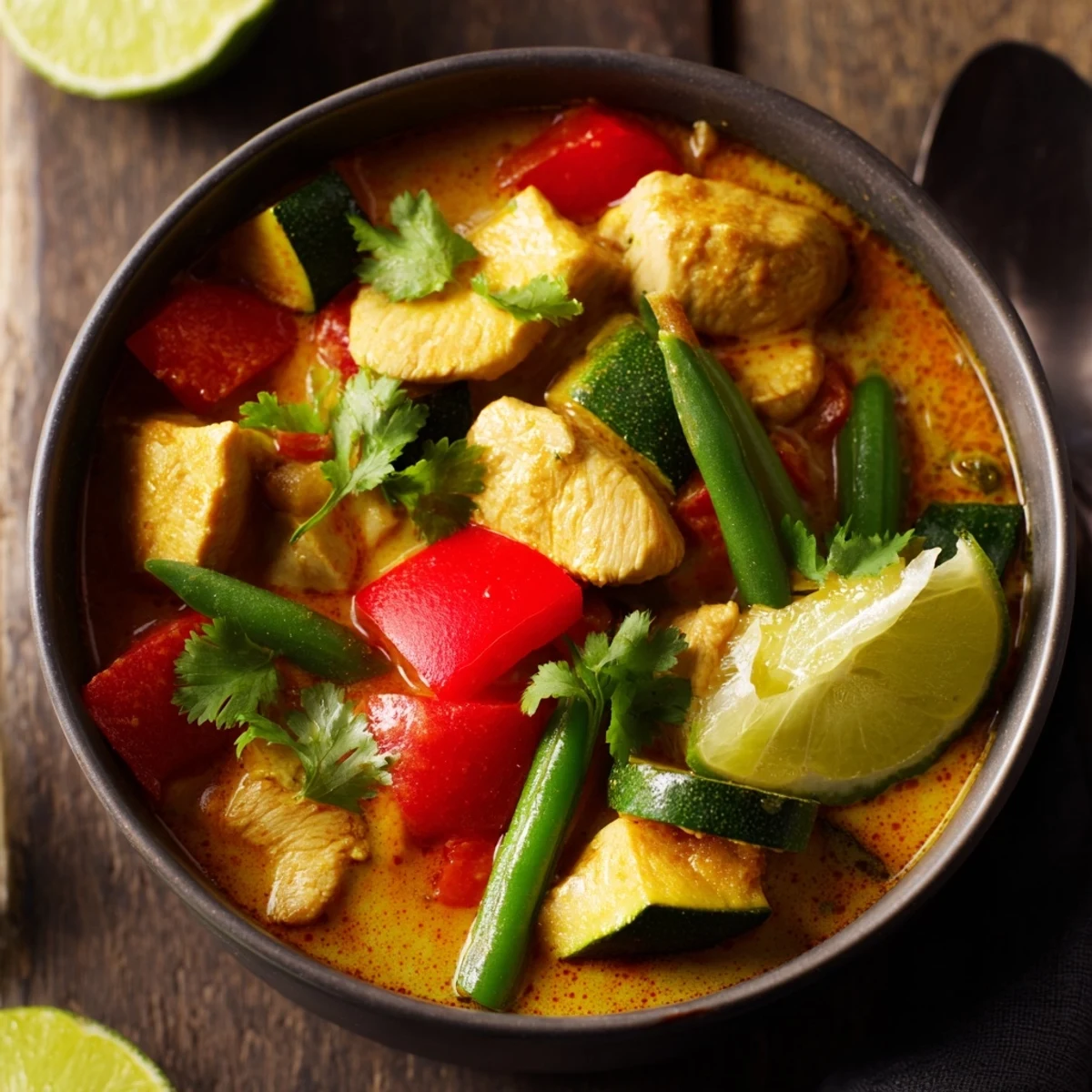
Save This curry reminds me that simple ingredients, treated with respect and a little patience, become something that feeds more than just hunger. It's the kind of meal that makes sense on cool days when the world feels like it needs warming from the inside out.
Recipe FAQs
- → Can I substitute chicken with a plant-based protein?
-
Yes, tofu or tempeh can replace chicken for a vegetarian variation, retaining texture and flavor.
- → How can I adjust the spice level?
-
Modify the amount of chili flakes according to your preferred heat tolerance.
- → What vegetables work best in this dish?
-
Zucchini, red bell pepper, green beans, and red onion offer a nice balance of texture and flavor.
- → Is this dish suitable for a low-carb diet?
-
Yes, it uses lean protein and low-carb vegetables, making it compatible with low-carb nutritional plans.
- → What are good serving suggestions?
-
Serve alone or with cauliflower rice to keep the meal light and low in carbohydrates.
- → Are there allergen considerations?
-
Contains coconut and may contain nuts if garnished with seeds or nuts; check broth and spice mixes for gluten.